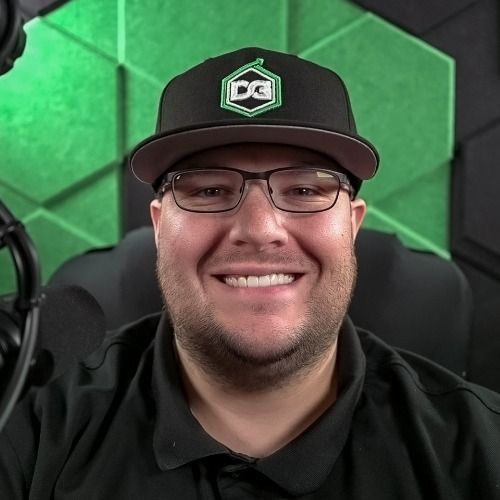
The Evolution of Detailing: From Experience to Innovation
WORK WITH ME HERE: https://gabe.detailinggrowth.com/podcast
In this episode of the Talkin’ Paint podcast I sit down with Jeremy Harding from Nasiol USA to talk about what really matters when you choose a coating brand for your shop. We walk through his thirty plus years in the industry, why Nasiol chose to be a true manufacturer instead of only a label, and how that choice shapes the products installers use every day.
I ask Jeremy the questions that owners are already thinking about. We talk about single layer coatings, real world durability, what makes an installation actually repeatable for a team, and how to judge a coating line without chasing hype. We also dig into values, how brands treat distributors and shops, and why your mindset as a student of the craft will decide where your business ends up.
Chapters:
- 00:22 - Concerns About Product Safety
- 03:33 - The Journey into Detailing
- 09:56 - Transitioning to New Opportunities
- 13:45 - Introduction to Naziol and Its Market Strategy
- 17:07 - Introduction to NASIO Products and Market Positioning
- 29:29 - Understanding Coating Chemistry and User Experience
- 31:07 - The Importance of User Experience in Product Engineering
- 39:01 - Transitioning to Business Perspectives
- 49:42 - Transitioning from Detailer to Distributor: Insights and Experiences
- 55:55 - A Shift in Perspective on Industry Relationships
- 01:01:17 - Navigating Training Challenges in the Industry
- 01:04:46 - Approaching Success as a Student
- 01:06:23 - Growth Through Experience
Short list Companies Mentioned
- Nasiol USA: Nano coating manufacturer focused on safe, high performing products for installers.
- Detailing Growth: Full stack marketing and growth partner for detailing and film shops.
- Autoality: Supply partner that helps shops lower costs on towels and consumables.
- Meguiar’s, 3M, RUPES: Brands that shaped Jeremy’s experience in paint care and tools.
Short list Websites Mentioned
Transcript
You know, we signed a contract and I flew back home. And you know, two years later, here we are working on expanding the reach of NASIO here in the United States.
Those products were being found where people don't live and they're found in the deepest parts of the ocean. They were found in really remote areas and all sorts of stuff like that.
So all of a sudden the alarms are going off that there's something really wrong with these products and they're not safe. You know, they're going to be in the environment forever. They're actually causing pollution and problems.
So borrowing some experience from people that have been using our products and getting their opinions on things, I think is way more important than hearing it directly from us. We can talk about the features, advantages and benefits. We can talk about experiences that other people have had.
But don't you want to talk to them directly about their experiences and get their unbiased reviews? They'll tell you the good, bad and the ugly. Do you have eight years of experience or do you have one year's worth of experience repeated seven times?
Are you stuck in that first year's worth of experience? In other words, have you grown, have you, oh, have you actually grown during that seven years?
Or are you just repeating that same thing over and over and over again?
Gabe Fletcher:The Talking Pain podcast is brought to you by detailing growth.
That's detailinggrowth.com detailing growth is the industry's only US based full stack agency that provides you with full custom web design, ongoing SEO, local SEO via Google business profile, ad management for Google and Meta, and an entire business suite of automations with our Grit suite CRM. Detailing Growth also helps businesses with consulting and business coaching and systems implementation.
Head over to detailinggrowth.com and sign up for a free strategy session. Hey everybody, thanks for tuning in today.
Welcome back to the Talk and Paint podcast, the only podcast in the auto detailing and high end auto film sector designed to give you the most amount of business executable value for your time. Thanks again for tuning in today we have a guest.
I know that you guys love to listen to me usually rant and go on and on about what you're doing wrong every day. Well, today we decided to change things up and today I'm joined by Jeremy Harding of Nasio.
He's here to kind of talk about what Nasio is doing here in the United States and you know, what they're doing for the industry. Tell us a little bit about what he has going on, where he comes from, what he knows, what they're prepared to do for the industry and just.
Just going to have a nice chat and discussion. You know, we'll see where it goes. So, Jeremy, thanks for coming on, brother. I genuinely appreciate it.
Jeremy Harding:Gabe, thanks so much for having me. I know we've been talking through different social media platforms and talking about potentially doing some podcasts together for a little bit.
So it's great that we've been able to come together today and get chatting. Yeah. And if you want to start ranting, we can start ranting. You know, depends on how much hard drive space you got to record this, so.
Or we can, you know, come back again another time and talk about other things. But yeah, I'm here to talk about whatever you want to talk about.
Gabe Fletcher:Why don't we start with who you are, where you come from, what NASIO is about and what you do for them.
Jeremy Harding: s.:Started doing things for friends and family, and then it turned into referrals and then know made a business out of it. So I actually had my first business registered in Massachusetts when I was in high school, and that was called Details. You know, super original name.
You know, in Massachusetts, there was definitely a detailing season and there was a. Definitely a. Not a detailing season, which is winter.
So for me, what I would do is I would try to save up enough money to make sure that I could, you know, keep all my bills paid throughout that. That winter period. Slow period. There was one winter where I didn't put enough money away. It was just after high school.
I was buying all my products through my local PPG paint supplier. They service the body shop industry as well as some industrial clients, and they asked me to come work for them for a while.
You know, I gained a lot of experience when it came to the paint world. So for me, because I was such a detail junkie, I applied all of that to detailing while I was working there.
I used to do a lot of clinics with McGuire's Maguire back then. Had a professional division with like 15 people that were account managers and they would go out and do clinics and they would work with.
Gabe Fletcher:That was the start of the D series line.
Jeremy Harding:So I had just started working for the paint jobber when the D line came out. The original D line came out. So I was really excited about the D line. I'm glad you brought that up.
I actually started working a lot more with the McGuire's representative.
for them in the Northeast in:So day one, I started as a technical trainer. So going out and teaching people, that was the intention of what I had signed on for. A couple hours later, I was a territory manager. So I had.
I had account responsibilities for all of the northeastern United States. So, yeah, it was pretty interesting, but it was fantastic. I didn't know any better. I just knew I was part of a great team with a great company.
I knew the products were fantastic. I had a lot of experience with them, so I wasn't worried about anything. Fast forward 13 years later, I was still with the company.
There was a downsizing. 3M had actually purchased the company. You know, seven years, eight years earlier.
I worked with the 3M side of the Meguiar's acquisition for actually longer than I worked for Barry McGuire. So we started working a lot with their collision group.
So they're people that are selling sandpaper abrasives, they're selling compounds and polishes, they're selling all that stuff to the body shop industry. And I got to learn a lot from them, a lot of great experiences, got to do some amazing stuff and really helped me as a professional to grow.
So about the end of:So they started gutting a lot of different companies and 3M started gutting McGuire's as well. So they actually went right to the professional team. And the professional team.
We lost a lot of great people and I was impacted by that and I was looking for a job. I was pretty fortunate that we had just had a trusted long term McGuire's employee had just left and he landed at this great company.
So I reached out to him and said, hey, you know, are you hiring? And he said, yeah, call, call my boss. Here's his number. I called and had a great first interview. Just talked to this person blindly.
A couple months later, we signed on board and I was actually the first salesperson at rupus usa.
Gabe Fletcher:Wow. Okay.
Jeremy Harding:The fortunate thing was, you know, we came in at the very early stages. They had really just established rupus USA as a company. Ye ended up working into the role of national sales manager.
And I was There for seven years, dude.
Gabe Fletcher:Like this, it's like connected to DNA at this point.
Jeremy Harding:Like, oh yeah.
Gabe Fletcher:Almost all of your professional career, you've worked for large name companies at every single endpoint inside the industry. So like, clearly you, you may know a thing or three or ten. Working for Rupes is like, that's pretty sick.
I think when people think detailing in our sector and you say the word Rupes, I feel like Rupes is like, that's synonymous with high end because of the innovations they made in tools. And Rupes gave the industry tools that like, didn't make you want to jump in front of traffic at the end of the day, right?
Because they used to be really rough and it would like, they would genuinely suck and tear you up. And like Rupez completely revolutionized that with the Bigfoot series.
Did you have a chance to work on and like, have input on developing some of those?
Jeremy Harding:Oh, absolutely. So seven years I was there and, you know, they would typically lean on our expertise and our experience pretty heavily.
You know, engineers would come out with some changes, engineers would send us some samples and prototypes of tools and we would be able to give our feedback and, you know, they'd make some adjustments and, you know, eventually these things would make it to the market.
Gabe Fletcher:Because they were originally known for sanders.
Jeremy Harding: tory goes back all the way to:Then the idea kind of came out, hey, what can we do to help the body shop industry, which is where they were really doing a lot of, a lot of work with the, the polishing systems that they had.
It kind of said, well, you know, we get a great finish out of a dual action polisher, but they're not aggressive enough to remove, remove sand scratches. What can we do?
Gabe Fletcher:How did you end up working with Naseol?
Jeremy Harding:Short story is they reached out to me several years ago and they were reaching out, trying to expand into the North American market. I thought they were just needing some help. Not knowing that they were offering me a job, I'm like, oh, thanks, but no thanks.
You know, I'm, I'm really happy where I am. Fast forward. I was offered a director role within the company, but it required a relocation that I wasn't willing to do.
So they found somebody who was willing to accept those responsibilities and, you know, I became a free agent. So I happened to reach back out to NASIO and said, you know, I'm available if you are still looking, you know, let's talk.
They reach out to me one day and they're like, well, you know, we think that we'd like to move forward. We'd like to do an interview with you. Obviously we're a long ways away and we've never met in person, so we'd like to meet you.
There's an event coming up soon and we would like you to maybe come and work this event with us.
We'll get to know you, we'll see how you work and interact with people, and from that point we'll decide whether or not we want to continue with an interview process and potentially make you an offer. So they said, that sounds great. What's the event? And they said, oh, it's wax stock. And I said, waxdock in like two or three days.
Gabe Fletcher:Waxdock?
Jeremy Harding:And they said, yeah.
Gabe Fletcher:Wow.
Jeremy Harding:I said, Waxdock in England? Yep. I said, well, you know, I have to leave like tomorrow in order to make the event.
And they said, yeah, we need to get all of your information so we can book your, your travel. So I looked at my wife and I said, hey, they want me to, to fly to England and I might be gone for like two weeks as part of the interview process.
And she says, if that's what you want to do, you know, I'll support that. So, you know, that's a great. Love you, honey. Thank you so much.
Gabe Fletcher:That's a great wife right there.
Jeremy Harding:Yeah, yeah, she is. And so I basically packed my bags, I got on a plane to England, got to meet those guys. It was a great first meeting.
Got to shake hands with everybody, but I'm jet lagged out.
And you know, we end up getting over to the Coventry center and we're walking through the parking lot and I hear from behind me just somebody yell out Jeremy Harding. And I turned around and it's Keith Du Plessis Sydney from pns, the guys from the rag company.
And you know, so I've known these guys for a long time, so we're kind of hugging it out and like, hey, you know, what are you doing here? And making introductions between the Naziol team and, and these globally known detailing companies. And they're like, well, how do you know them?
I'm like, just my experience in the industry, you know, we've, we've done a lot of different things together. You know, we've, we've all become friends.
So yeah, we go inside, we're talking to the event coordinators and talking about things and I get a big slap on the Back from behind me. And it turns out to be Alan from AM Detailings. And you know, he's, he's a buddy of mine too. The folks from Naziol are like, what is going on here?
You know, like, who is this guy? You know, two years later here we are working on expanding the, the reach of Nazi all here in the United States. So that's awesome.
That's kind of like my origin story.
And it's not a short one, but there's also more than 30 years of experience here where, you know, starting from detailing to, you know, working with three, you know, premium brands. It's a lot to talk about.
Gabe Fletcher:I mean, that's a heck of a pedigree when it comes down to it. Like you did McGuire's during like the massive higher end expansion into the Professional line. You did Rupes. And then now you're at Naziol.
You guys are making some of the next generation products that are coming into the US market now. So tell me a little bit about Nasio and what they, what you guys offer and what you, what you bring to the US Market that, that stands out.
Jeremy Harding:If we take a look at the detailing space, there's a lot of different brands that are out there. You know, the brands are, you know, every couple of weeks there's a new ceramic coating brand that comes out.
And you know, I wasn't really sure who Nazio was in those early days, in those early conversations. And the, the thing that really got me was there's a big difference between a brand and a manufacturer.
Turns out Naziol is actually a manufacturer and that really intrigued me because not only did they sell Naziol branded product, but they also manufacture the raw materials, they manufacture products for other companies. And that's actually a huge component of, of what the company does.
create the Nazio brand until:So Nazial brand was originally kind of like a demonstration brand of like, here's, here's the things that we could do with great packaging and great formulas and you know, talk to us about, you know, what your wants and needs are as, as a different brand. We'll make it for you. And the brand actually started growing. There's distribution globally.
We have multiple distribution centers here in the United States, based in Chicago, we have, in the Czech Republic, we have Turkey, you know, so we have different distribution centers to cover different markets. They've been growing a lot with just the Nazi all brand.
So the natural progression is to grow the US market because it's seen as the, the place where you develop and establish a brand for a global reference. Everybody looks to the US what's the US doing for, for detailing? What's the US doing for processes, for products, what's popular there?
So everybody has a focus on what happens in the US detailing market for other sections of the globe.
Gabe Fletcher:What is NASEE all bringing to the market here in the US right now? Like, what's the flagship offering that you guys have?
Jeremy Harding:I'll just say that we cut our teeth and we really focus on nano ceramic coatings.
So for us making formulations that are really high performing, that are easy to use, that are also safe to use, whether they're safe for the environment or safe for the, the technician who's installing the coatings and handling them, there's a big emphasis on that safety as well.
So we make some great products that as people are discovering them, they're telling their friends, who are telling their friends, who are telling their friends.
Gabe Fletcher:It's got a big grassroots thing moving right now. And I mean, listen, that's the best kind of growth. It's honest growth and it's not purchased.
Jeremy Harding:Correct.
Gabe Fletcher:So I like that idea and that's a great thing to hear and it's a great sign.
Like if a market segment is adopting you and, and accepting you and spreading you based upon the merit of your performance, that typically pretty well indicates that like, you're on the right track.
Because, like, that's the best outcome for a business is that if it can grow on its own, even if it's slow and steady, if you're seeing consistent growth and consistent positive number movement, there's a pretty good sign that like the market accepts you and you found product market fit. That's fantastic.
So that leads me to my next question is when you look across the offerings of, you know, the larger, more popular names here in the United States and that's like gtechniq Gion. You know, DIY is a big one coming up. There's CAR Pro, there's System X, there's Ceramic Pro, there's xpel.
Like when you see and look across all these names and the products that they offer, what is it that NASIO brings to the table? That's for fundamentally different. You can answer this any way you please.
What's fundamentally better about NASIO products versus what we currently have here?
Jeremy Harding:You know, that's all subjective, right? So I would say that, you know, from the performance aspect, single layer application that gives you multi layer, multi Product results.
I think that just really helps the situation. When you can go around the car one time and get the same benefits, if not better benefits than going around multiple times with multiple products.
You have a lot better efficiency and I think that's really going to help if you are an installer that does this on a daily basis. I think it also helps if you're a DIY guy.
You know, if you're a DIY guy, the less times you go around the car, the less you're sweating bullets and you know, less things are going to happen that make your installation bad. So I think that we take a different approach to when it comes to like our claims, we send all of our products out to multiple independent labs.
We have them do their independent testing, we get all of their data back from all those different labs and we analyze what they have to say about our products from there.
Just from the durability claim aspect, what we typically do is we'll take their, their lab results and for an Asiol brand, we just cut all of those claims in half and say that's our durability standard. It gives us the ability to, you know, to under promise and over deliver. We're going to get better results in what we say.
Even if you do a bad job, you're probably going to get real close to those, those numbers. So a product like CR53, which we advertise as a three year product, lab tests say something different, they say a much higher number.
But we know that we can put that on the box and feel comfortable.
We also don't have a dedicated installer only program that says that you, the only way that you can get your hands on certain products is to go through a process and you know, be certified and things like that. So that means the products are available for anybody who wants to buy them.
You're going to pay full retail price for those products, but they're available to you. So if you don't have experience, you don't do a great installation job, you're still going to get great results.
If you are professional, you can join our pro club and you'll be able to get those at correct price. That installer should pay for those for their professional detailing business.
Gabe Fletcher:I like a lot of what you had to say, but I think, I think a lot of people are immediately going to ask what's the quantifiable, like what's, what's the quantifiable measurement that you guys do have? If you have one, is it published, is it not published? And if it's not.
I would understand why that's the bigger thing here is that detailing is naturally very aggressive and brand sensitive when it comes to the products that everybody likes and what they represent and who's better than this and who's better than that and you hit it right on the head. Is like a lot of it is subjective. Like, but like by and large a lot of it is subjective.
But there's also a lot of like verified case studies out there for certain products that have done certain things that you know, this is what happens to them. And you know, sometimes those things are taken out of context.
So I guess if I'm a business owner and I'm a shop, it's small, you know, I'm doing about 25 to 35k, sometimes maybe I hit 40amonth. How does nasty all show up to me and provide me additional value?
Jeremy Harding:Okay, so obviously we have single layer, so that's going to help with your efficiencies. But what we haven't talked about are, so those are, those are on the business aspect side of things, right?
So you asked about quantifiable, what results can you actually provide here? The other things that we really should talk about are the insane gloss, the hydrophobics and the feel, the actual touch.
So those are other tangible things that are related to the properties of the coatings. So incredible gloss, color enhancement, slickness to the touch and wait till you get those, those coatings wet.
It's a lot more of an experience than just like the initial installation. So the initial installation is great, it's a great user experience.
The products are easy to install, you don't have to go through multi day training classes in order to learn how to get a great installation.
If you've done ceramic coatings before, all I need to do is tell you what our features, advantages, benefits, what the best way to install these products is going to be and then let you loose. It's not that hard. You know, there's a lot of products out there that are pretty difficult to install.
It's kind of crazy to hear about companies that are still coming out with, you have to put layer after layer after layer on and they're difficult to install, they're difficult to remove, they're just difficult to work with and they take hours if not days to do an installation. And then you go and put one coating of a nazial product on there and you, you're gonna get like that performance. So it's, it's kind of crazy.
I think sometimes the hype is built up into that this is such a difficult process and such a difficult product to install that it's just, it has to be so much different, so much better than other things that I can find out there. It's not the case.
Gabe Fletcher:Can you give me details on how that's not the case?
Jeremy Harding:Right.
Gabe Fletcher:Because so if I think about, and this is just, this is me playing devil's advocate, right?
So you've got a product that installs on a vehicle and it flashes very, very quickly, and if you don't remove it very, very quickly and precisely, you end up with high spots. That tells me that there's probably very minimal carrier solvent present in that coating product. Right, right.
And carrier solvent and the amount of it present in the coating product is also directly related to how much of the sol actually gets left behind in deposits with the particles. Right. Because most of it evaporates, but a lot of it does not becomes part of the binding process.
Because when I think of that, I think, okay, well, that I immediately want to say that the solid material or solid particle, solid content, as they say, ceramic content is higher because there's less carrier solvent. So naturally the carrier solvent evaporates very quickly because there's little of it there. Right.
So what is the fact when it comes to difficult to install products that flash quickly versus one that doesn't do that but has better protective properties, where's the misconception and what does the industry genuinely not understand?
Jeremy Harding:The misconception is everywhere and everything that was just kind of highlighted because everybody thinks that they're a chemist. I at least can, can say, I know I'm not a chemist, right.
I, I can show you how things work and I know why things work from a, from a high level, but not when it comes down to, you know, I'm not an organic chemist, I'm not an inorganic chemist. I don't know all of these mechanisms that are known by other people that are much smarter than me.
But what I can tell you is that we had these conversations back in the days of Maguire's and even at the days of Rupes, where we would talk about the chemistry involved with making high performance compounds and polishes. So I'm going to totally ignore your question.
I'm going to go into this experience, I'm just going to say this diminishing versus non diminishing abrasive SMAT technology, so on and so forth.
If I start talking about these terms, you're going to have your initial reaction to how a product should perform based off of what you Think you know about the abrasive technology and how that works is going to form a bias in your head about how a product's supposed to work.
Gabe Fletcher:First truth bias.
Jeremy Harding:I'm curious about this one. So this is going to be a little bit of a thought experiment and me getting to know Gabe Fletcher a little bit better.
If I say that I have a diminishing abrasive compound. What kind of performance do you expect from, from cut to finish? What kind of performance do you expect on finish?
Gabe Fletcher:I mean, I would, I would immediately say, well, that's probably going to depend upon like speed in the machine is running, which machine you're using, which pad, which paint manufacturer, and by manufacturer meaning like what manufacturer vehicle put the paint on. Because, you know, we've all kind of learned which paints could do what just through the years of doing it.
And there's a lot of variable there, right, because you can pick a light cutting and light abrasive foam pad and put on a diminishing abrasive that's rated for high, high aggressive start to like mid grade finish. And like you probably be able to work that out and get a pretty decent finish out of it at the end because the pad is lower on the aggressive scale.
Where if you were to take that same product and put it on a microfiber cutting pad, you're probably not going to get a super great finish because the abrasives will probably clog the pad and you're just going to drag them around and not get proper evacuation and not have good enough contact surface by the time it finishes out as you continue to work the polish down.
But again, and I think where you're going with this is that most of the outcome that you get comes down to how you use the other tool in the process, what your skill level is at with that tool, and also what your understanding is of the baseline technology in play, right? Diminishing abrasive and how that works. So like there's a lot of variables in play there, right?
And which is further compounded by the fact that there is no unified standard set of operations for detailing.
Because like there's nobody involved at a multi bajillion dollar level like Ford or, or whoever or manufacturer level that's making these things because like polishing paint is not making a car. Two totally different things.
So there's no unified set of standards for anybody to follow, which introduces the following problem and that is, that is that everybody has their own way of doing things, right?
Jeremy Harding:So you, you've given a very long Detailed answer based off of a lot of experience and a lot of education. And there's no quick answer. You just named off a whole bunch of variables that have to do with nothing regarding the, the actual abrasive itself.
So at the end of the day, what carrier solvents are used, what the binders are, the resin backbone, all these different things.
If I tell you what these things are, and I can't because I'm not a chemist anyways, but if I tell you what these things are, there's going to be a preconceived notion about how these things are supposed to perform.
Now you do have obviously higher solids products are typically going to give you better durability, better chemical resistance, UV resistance, and so on and so forth. So that's a good generality.
But talking about, you know, the, the carriers that are used are, there's going to be a lot of different carriers, so you know, their flashing rates are going to be different. That how that applies, how that affects the application, whether it glides on or if it sticks like taffy to the surface.
And, and it's difficult to apply. All these different things are just in this, you know, massive list of variables that can happen when it comes to chemistry.
You know, you have all these different interactions that happened and it's not just like one thing that that makes or breaks a system. So at Nazial, we started with research and development. That was our very first program. You know, that was our genesis.
We would have companies come to us and ask us for solutions to problems that they had. We would engineer a solution, sell them the IP which would be like formulations and things like that.
And then they kind of came back and said, hey, can you actually make this for us? You know, maybe we don't have the capability or we can't get those materials, whatever the case may be.
So that's why we started going into manufacturing.
So we've been manufacturing products for 20 years now and with all that type of experience that has been really focused on ceramic coatings, it gives us a lot of experience on how to fine tune things in a way that are going to give us all the best attributes.
Gabe Fletcher:I think that's it right there and that is that coatings aren't manufactured. And I think this is the, the thing that nobody quite understands.
And like this is me giving input from being like a product guy in terms of looking at how a product and how the user uses it in that everything is related to the ux, the user experience. That's how coatings are manufactured. They're manufactured based upon the experience that the average installer is likely to have.
Because you can only offer a product to the caliber of which it's lowest tier user will use or will provide. Because you can't aim for the top, because then you cut yourself out of a very significant market share. Unless that's your goal, then.
Okay, but I would say like 90% of the brands here engineer their products based upon what's the UX going to be, what is this coding going to be like for the particular installer that's installing it and how are they going to experience it, what are they going to think about it? And that tells me that again, there's no unified set of standards for ceramic coating manufacturing.
And because they can change the outcome to exactly what they want it to be.
Which means that I think at the end of the day that with our unified set of standards, there's no way for you to judge a coating, apples to apples, from one manufacturer to another.
Jeremy Harding:And the interpretation of the standards is going to be subject to personal interpretation as well. Yep. So I agree with you that most companies are going to try to fine tune things towards the user experience.
But I can tell you, you know, we won't have to look far to be able to find some examples of really difficult to install products that are supposed to have just unbelievable experience.
You know, the experience performance is really supposed to be very, very high, but it's so difficult to install that it's almost like it's a point of pride, it's a point of joy for the company to say, yes, you have to go through this. But the experience at the end, the performance at the end is going to be worth it. There are definitely some of those products that are out there.
Gabe Fletcher:There's definitely. I agree fully.
Jeremy Harding:I got to spray water on it to get it to do this and I have to do that and I have to do this or I have to put seven coats on.
Gabe Fletcher:Like, let's just be really honest, the five coat system from the Ceramic Pro Gold package thankfully is on its way and it like has no longer become the normal. And that is okay, because technology changes.
If I'm an operator, you know, and I'm running a 50 to $80,000 operation month to month, and every single time one of my installers picks up a product that I tell my installer to install and they have a massive complaint about it, or they're struggling to meet deadline with it, and like, let's say you've spent tons of time and energy on helping them with it. And it continues to be a struggle that tells me that something is fundamentally wrong and something ain't right.
What is it like something's rotten in the state of Denmark, so to speak. And I don't think any company in the industry should have to be okay with working with products like that.
And I'm sure that there's plenty of shops and plenty of operations that get along with those things just fine.
I also know that the manufacturing has come along and is now far enough advanced that that shouldn't be a thing, because we've seen codings all across the market that don't have those problems, that have great performance outcomes that have been documented. And, you know, we're focusing on the really hard to install stuff.
And thankfully, like, nowadays, those types of products are becoming less and less frequent and less and less prevalent.
I think it comes down to you, as a business operator, should probably pick the coding that, A, you know that you can stand behind, right, because you believe in it, whether the installation is difficult or not.
And B, you should probably pick the brand or business or company that you want to work with based upon the values that they represent and if they align with you. And I'm sure that everybody could get. Get behind that. And that's what leads me to ask you, my next question is what are the values of. Of. Of nasio?
What are those values so shops can. Can make an educated decision?
Jeremy Harding:It started basically day one. The values were based off of a desire to do good for people and the planet. And the way this started was the.
The three founders of the company are, you know, they're nano engineers.
Gabe Fletcher:And is that a thing?
Jeremy Harding:That's a thing.
Gabe Fletcher:Today I learned.
Jeremy Harding:Yep, that's a thing. So some different disciplines that are there and, and some are heavily involved in the textile process, which.
That's a whole other show, which is so cool. But with most of these universities that are based off of technology, they, they have a lot of lab.
Lab time that they do, and they get in a lot of projects from. From the outside. They can come in from different governments, they can come in from businesses.
But basically, you know, we're all familiar with things like MIT researchers have done this thing, or Caltech researchers have done that thing. Right. They're students and, you know, these things kind of come in as lab projects. Hey, we have this problem. Put your. Put your best people on this.
Let's see if we can. If they can solve it. So project came in, they wanted to have a protective coding system designed for very specific things.
thing happened in those early:We were starting to understand that the forever chemicals, these PFAS, Dupont, Teflon, 3M, Scotchgard, these are some, these are some of the names that are associated with those early nano ceramic coatings. Those products were being found where people don't live and they're found in the deepest parts of the ocean.
They were found in really remote areas and all sorts of stuff like that. So all of a sudden the alarms are going off that there's something really wrong with these products and they're not safe.
You know, they're going to be in the environment forever. They're actually causing pollution and problems. So what they immediately decided to do was not go with that type of technology.
They wanted to make sure that they had something that wasn't going to contribute to problems with safety, with health, and with contribution to problems in the environment. Also keep in mind that the whole idea of creating a protective product is to make sure that they preserve these things so they last longer.
And the longer things last, the less that they're contributing to, to waste, the less they're contributing to, you know, landfill and so on and so forth, or having to, you know, manufacture a replacement. So all of these things kind of come full circle.
In that very first lab project, that lab project comes, they create some formulations, they, they do extremely well and they realize that they're onto something. And the three lab partners formed a research and development company on the spot.
So they started taking more and more projects as the research and development company.
And then as I said earlier, there was, there were some customers that really needed them to make those products because they couldn't make those products or they couldn't have a source that would make those products.
So they received grants to build a reactor farm so that they could synthesize those raw materials in house, be able to make their formulations for those companies. And then, you know, that just took off from there. So manufacturing started, you know, very early.
And that synthesis of raw materials, making base compounds, things like that, or fully finished formulations, that happened really early on. So the Naziol brand didn't start till years later. We had already been manufacturing products, doing research and development, and that's our genesis.
So from us, it's all about starting with a commitment to preservation, making healthy products and not contributing to problems that we have across the planet with environmental concerns.
Gabe Fletcher:Let's switch gears here and like look at it through a Business lens, I think those core fundamentals are great, but I think if you look at it through a business lens, there's also another set of values that you, you like, you have to have or should be looking for when you pick a vendor or you pick a company that you're going to work with. So what are some of those things for the, for the shops that are out here?
Like what, what is it that you stand for when it comes to standing behind and providing a product to a detail shop here in the United States? What does nasty all bring to the table for these shops here in the United States?
And what core do they have when it comes to being a part of the US Market?
Jeremy Harding:So for us, we want at this stage to make sure that products are accessible by people who want to purchase them.
So we could have gone a route where it was like a certified installer only network that you could only buy the products directly from Nasio as the manufacturer. But we decided to go a little bit of a different route. My experience with distribution partners is, you know, it's gone for decades.
And what I realized was that if we wanted to have better adoption, if we wanted to get better at getting those products out to people, we needed help.
So we're going and enlisting the help of distributors, professional detail supply companies across the United States to be an extension of our sales and marketing and technical teams by empowering them to offer NASIO products so high performance, easy to use, you know, the results have been very good. And I think they really for us, make sure to, to reinforce that that was the right decision for us.
We know there's a lot of companies that they do a lot better job with profit because they sell directly to consumer. For us. What we're trying to do is make sure that we have good quality partnerships that are going to be mutually beneficial.
They're going to help our brand grow, they're going to help the shops grow, we're going to help them grow.
You know, we're trying to make this like a big team by doing a distribution network here in the US we're trying not to make this a program where you have to be like a certified installer that goes through training programs and in order to access certain products and things like that.
As we've talked about, I've been in the industry for a long time and you know, there are a lot of those programs that are still in place today where it's a certified only network that can get certain products. And, and quite honestly, some of the, the, the biggest Detail shops that are using our products.
They came to us because they had a problem with the programs that were, that they had been previously involved with. You know, maybe they like those products, they, maybe they loved those products in those companies.
But something went wrong and those relationships soured. They were looking for something as an alternative to whatever they were using.
They were recommended to try Nasio and you know, we try to make it easier for them. You know, they can buy it from multiple distributors.
They, they don't have hoops to jump through with going through certification classes and, and things like that. So you know, I would say pro level quality and performance, but available to everybody.
Gabe Fletcher:I'm going to assume the role of a shop that you've been talking to and you know that that shop is probably going to pick a manufacturer of ceramic coatings to carry, let's say I'm looking at this, this company here and I'm also looking at you, Naseo. Why should I pick nasio? What fundamental value are you going to bring to my shop and my business that this other company is not?
What is it that you bring to the table that's going to be, that's going to benefit me as a business owner?
Jeremy Harding:So Gabe, here's where everything falls apart for me. I'm a terrible salesperson. I can't sell you anything.
But I'm being honest when I say, well, in this case, if it's a shop to shop situation, I let other shops be in contact with those shops and they can talk about what their experiences are, what those things mean to them when they had switched over to using Nasiol products.
If they're telling them that the customers love the look and the feel, that they're having a great user experience, the customers love the products, that's great. If they talk about how their installers, their employees were able to really do high quality installations very easily, that's great.
You know, whatever is important to these shops, they should be talking to each other about because they're not going to believe me anyways. Right. I'm, I'm the sales guy for, that's representing a brand. You're going to try to sell me anything and everything.
I'd rather you hear it from somebody who has the experience that means more to you than coming from a salesperson.
Gabe Fletcher:What I'm hearing is that Nasty all doesn't have a pitch. The pitch is our reputation.
Jeremy Harding:Reputation for quality and performance. Yeah. You and I have talked about quality and performance, you know, during this podcast and it's really important.
It's an underlying theme for everything that we've been discussing. But at the end of the day, you're going to need to sell yourself.
If you're looking for something, we probably have something that would, would be very suitable for you to, to try at least. And you know, we try to make sure that the products are going to be super easy to install.
So that way, when you first break open a bottle and start wiping it on, there's something different about this that gives you the confidence to keep going and want to keep going for a long, long time. So great user experience, immediate results.
And then you go months down the road or even years down the road, and those customer vehicles keep coming back and when you first hit them with, with the foam cannon and everything's still beating up, it puts a big smile on your face. You know you made the right decision. But that's only going to come with time.
So borrowing some experience from people that have been using our products and getting their opinions on things, I think is way more important than hearing it directly from us. We can talk about the features, advantages and benefits, we can talk about experiences that other people have had.
But don't you want to talk to them directly about their experiences and get their unbiased reviews? They'll tell you the good, bad and the ugly.
Gabe Fletcher:I think that's an interesting take and I don't think I've ever been anti pitched. It's the first time I've ever, ever had that happen. The official stance is we do not have a pitch for you.
You should, however, talk to some people that are using our products and get the feedback from them and then you can make your decision.
Jeremy Harding:I do the same exact thing with distributors. You know, right now Nasio is starting to get a lot more popularity.
People are at least hearing the name and hearing about some performance that we have from some of the products.
But now when I reach out to different distributors and talk to them, one of the, one of the first things I try to offer is here's a list of our distributors who have agreed to talk to anybody about their distribution experience with Nasio. Feel free to contact them directly. You'll get their unbiased answers on things. They'll tell you things that I, I may not even know.
So you should talk to people who are in your shoes. I can tell you what I think are advantages for your company and what I think are going to be selling points.
But if you talk to people that are in this with you at your level, I think it's important. I think you should get their feedback.
Gabe Fletcher:So let me pivot into this. This has been a great conversation, super informative, and I think you've had a lot of really unique takes on a lot of different things.
When NASIO themselves looks for a partnership in a shop or in a distributorship or another brand partner, you know, what are you looking for specifically in the.
Jeremy Harding:Ideal partner from a distributor standpoint? I want them to have a verifiable history of being a detailed supplier.
We often do get approached by detailers who want to start selling NASIO products. That's not the right approach. We've had plenty of experience.
I've had plenty of experience over the last few decades where, you know, the end user wants to become the supplier and it works in a very, very low instance rate. There's not that many people that are successful at that.
There are those that are successful, but my experience shows me that that's just not the right path.
Gabe Fletcher:So you're talking, like, people that have, like, shop routes that they go on and, like, they're probably distributing an existing line.
You know, they might be doing, like, Tech Choice or they might be doing Stinger or one of the other larger, you know, bulk brands, companies like this. Plus, I'm assuming reputable E Comm distributorships are probably welcome.
The one thing is that, okay, you have an established history in being an actual solution provider for detailers. Okay. Is there an additional quality that you look for?
Jeremy Harding:Yeah, one of those.
Gabe Fletcher:In one of those partners.
Jeremy Harding:Absolutely.
Gabe Fletcher:One of those distributors.
Jeremy Harding:So I would say if you have an inherent quality where you are trying to help your customers, I want to be involved with you. I've definitely dealt with some people who have basically said, well, we're the biggest and the baddest, so you should. You should sell to us.
Well, that's not. That's not a value proposition to me.
Gabe Fletcher:No, you can absolutely get fucked today.
Jeremy Harding:Bluntly, I've had some of those conversations where I know what their reputation is for how they treat vendors or, you know, how they are at bill pay or how they are, you know, from the business aspect, I'm really looking for people who want to work together.
And if you don't want to work together and if you just want to, you know, if your hobby is to torture manufacturers with unreasonable requests or just, you know, generally being not nice to people, not interested.
You know, we want to make sure that we have things that align together, that we can kind of be hand in hand working together towards growing our businesses separately, but together. You know, not to discourage anybody from trying to make the transition from be from a detailer to becoming a detail supplier.
Gabe Fletcher:But I know somebody who has done that. I know somebody, and I want to mention him right now. That's Justin Kraus from Auto Detail360. So it's.
Jeremy Harding:It's an interesting thing because I don't know if this is a setup, but they're actually a distributor of ours.
Gabe Fletcher:I knew that. I knew that. I've seen Justin talking about Nasio online, and he said nothing but great things to say.
And he says that people in his network that he's delivering to are also saying positive things. That was just a great example of somebody who has transitioned per from B2C back to B2B. I know that he's had a lot of great things to say.
And Justin's also like a giant nerd like me and like, geeks out on the details. And if. If you can get a positive recommendation out of Justin, it's usually something worth considering. So.
Jeremy Harding:So let's talk about Justin.
Gabe Fletcher:Hats off to you, sir.
Jeremy Harding:Let's talk about Justin and, and his supply company because, yeah, this is a. This is a great example of a partnership.
So, you know, we had started talking some time ago, and ultimately we decided that we're going to move forward together. And so far, I've been out there multiple times. Justin hasn't been on with Nasio for quite a year yet.
And so I've actually been out there multiple times. We've done training events together.
Gabe Fletcher:I know he's one of your biggest mouthpieces.
Jeremy Harding:Yeah, he's. He's shooting content regularly featuring Nasio. He has signed up a bunch of his accounts as Nazio Pro Club members.
We can talk about Pro Club another time. Sidebar. But he's been very engaged.
So this is the partnership example that I would use when it comes to what am I looking for for a distribution partner. Some other great examples are, you know, he's doing demonstrations.
He's giving product to people so they can try it for themselves, knowing full well that they're going to love it and they're going to continue to buy it from him. So, you know, the investment that he's putting in on our behalf helps make this a partnership as well. There has to be some give and take.
There has to be some incentive for us to work together. If you just want to put my products on a shelf and not sell them, that's no benefit to anybody. Your money is tied up in my inventory. It's not moving.
There's no point in doing that. Doesn't mean that I need to be your primary line, but there has to be some, some working together in order to grow the line together.
I'm happy to come and support.
Gabe Fletcher:I think that's important to mention because you mentioned that like Nasio is not a, not a full exclusive lock in relationship requirement. So I think that's something people you know, genuinely understand and hear. And I also know that you are working with Auto Audi.
If you are a shop that's doing a high amount of ceramic coatings, you're doing paint protection, film, you're going to go through supplies and you're going to burn them up. What if I said that a shop that's doing $80,000 a year could save 15 grand on just microfiber towels by switching to one new vendor?
And that is why this podcast is brought to you by Auto Audi, the home of the Detailers Club. Auto Audi is a huge operation that you can sign up for online.
It is a one time 50 per year fee that gets you access to the Detailers Club where you will find the best prices and the best service and the fastest shipping speed in the entire industry. I have been using Auto Audi in my shop for the entire time I've been running it. Even while I was mobile I was using Autoality.
Sign up for the detailers club@autoality.com who is a supporter of the Talking Pain podcast. And I think you have a training coming up with them soon, do you not?
Jeremy Harding:We are talking about some different dates. You know, I've, I've known Dan from Autoality since my days prior while I was at the PPG company, the, the distributor for PPG paints.
He's actually the one that called me and asked me if I wanted to drive around in a big black shiny truck. So Dan and I have been friends for a very long time. I guess we're going on 25 years. 25 plus years. Yeah.
So yeah, when he joined the audio team over there, it was, it was a great experience and we got together pretty early on and they have been very successful with the line.
Gabe Fletcher:So those of you who are listening and if you're not aware, Auto Audi is one of the best places that you can spend your money across the entire industry. They have this thing called the Detailers Club.
You pay one fee a year and you get access to the best industry related pricing, usually column two or three or better. And you often are getting the best shipping rates with no markup and typically orders process same day for shipping.
So if you're looking to save the most on some of those consumable items. Autoality is one of the best places for you to go. Microfiber towels, applicators, brushes, wash pads, grit guards.
All those types of things that all your team members in your shop abuse, throw away and don't listen to you when it comes to care. Auto Audi has some of the best prices and the highest quality lines for those prices. And they carry NASIO products.
Highly recommend you check out Autoality. Definitely go look them up@autoality.com and it's like Mortal Kombat baby Audi, but it's Autoality.
So I want to end and ask you a few very direct questions in the United States market. What's been one of the things that has caught you off guard when it comes to the US industry that you were not previously expecting?
What's something that like genuinely has caught you off guard that you weren't expecting and that genuinely surprised you?
Jeremy Harding:I have actually been surprised at how some manufacturers have treated their distributors or their end users. Genuinely surprised about that.
I come from a place where I really want to have a great experience with people, where I can know people's names, you know, know what their businesses are and you know, build a little bit of a reputation there.
What I have been really surprised about is how some manufacturers and distributors take a look at their end user customers, the people that are putting food on their plate as, you know, difficult to deal with, unimportant, you know, the way that they talk to them, communicate with them.
You know, there's some programs out there where you have to buy a certain amount of product every month or a quarter or a year in order to stay in their program.
You know, what I typically see or get a lot of complaints on are that the way that they're talked to about the program, hey, you know, you're falling behind. You know, the way I would say is, hey, you're falling behind. What can we do to help you with this? You know, is there a problem?
Is there something we can work on? You know, more of a cooperative approach?
They kind of hold the gun to their head and say, hey, you've got until this date to catch up here and if not, you're out. And I can tell you that's where we pick up a lot of Nazi all installers. They were in love with this other brand, right?
And they told everybody how much they were in love with the brand and you have to try it.
And you know, we're big giant advocates for these other brands and then something happens and now they're they're actually wounded by the conversations that took place and nothing will make a difference. Those brands could come back and apologize and so on and so forth, but the damage is done.
You know, it's, you know, it's a bad relationship at that point and they're looking for an alternate.
And quite honestly, that's been a great thing for us because I have the ability right now at this stage of development to spend time with people, to talk to them about what they want to answer phone calls to, you know, talk via text message or social media and try to have a more of a personal experience there.
I'm definitely, I'm not trying to sell anybody on Nasio, but I can help them where they need help and if I have the right products, they're going to get them. If they, if they're looking for something I don't have, I'll send them the way that I think is going to be best for them.
Gabe Fletcher:And I think that's, I think, I think that's a great way to carry it and because it becomes mutually beneficial.
Jeremy Harding:Right.
Gabe Fletcher:Besides the point you just mentioned, what's one thing that you hear on a daily basis that drives you nuts related to this industry? What drives you insane? That it could be misconception or wives tale, whatever that is, I want to know what it is.
This is your one chance to set the record straight with the understanding that the words that come out of your mouth do not represent that of Nasio, they represent that of Jeremy.
Jeremy Harding:There's a good list here for sure. Let's, let's just say that I am shocked at how much people really want to race to the bottom with pricing.
You cannot run a business you will not be around.
If you are just responding to everybody who comes along that's brand new in the industry that maybe detailing is a side hustle and they're down the street from you and they're, they're quoting a hundred dollar details. That's not your competition, they're just not your competition. They're going to come, they're going to go, they're going to be gone.
And if you drop your prices to try to compete with them, no, that's not going to work. The only thing you're going to do is make sure that you slowly run yourself out of business as well. Know your value, know your worth.
If you don't know your numbers, you can't set your pricing accordingly. Those are honestly, the people that don't know their numbers are usually the first persons to drop their prices. And try to be competitive.
I would also say that education is super important, but you don't have to go to every training that's ever offered, ever, ever, ever, ever. We have some people that come to trainings over and over again. It's almost like an addiction.
Go to the ones that make sense, and if you need a refresher, then it makes sense. If you're going for a social. For. For social reasons, I get that, too. But just don't go there to tell everybody how awesome you are at what you do.
And that's not how you do it in your shop while a trainer is trying to give them the advice.
Gabe Fletcher:Wait, hold on.
You're telling me you've had people come to trainings to interrupt the person who's teaching how to install their own manufacturer's products and say, that's not how we do it.
Jeremy Harding:Right.
Gabe Fletcher:What the f. What the actual. Like, in the most polite and professional way possible. What the actual.
Jeremy Harding:And it's funny because these are the people that are before the classes and after the classes have nothing but criticism for, hey, I'm having problems with my shop. Okay, well, you know, come to the class. You know, maybe we'll even comp it for you or something like that. Right? Just come to the class.
I want to genuinely help you.
And then they get there and they resist anything that's new to them or anything that they're not currently doing that's a different process or using different products. You know, again, I've been doing this for a long time, led a lot of classes. You know, been there and worked with a lot of people.
And it's incredible to me how frequently people like this show up, Gabe. You know, they. They show up and, you know, they think that they're being helpful.
I think most of the time, I don't know that they identify that they are being disruptive and that they're also kind of continuing some of these issues. Like, you got to get the heat. You got to get the paint nice and hot in order for it to correct. Okay, no, I'm going to kick you.
Gabe Fletcher:Square in the chest. If you come to a training class and say, you got to heat the paint up. Like, shut the. I would get out is what I would just. I'd lose it. Oh, dear Lord.
Jeremy Harding:You know, thankfully, I had some great experience with in my early days at McGuire's. You know, one thing that we were really known for was professionalism. You know, we tried to. We tried to.
Gabe Fletcher:I like that filter. I like if that wasn't a Parrot.
Jeremy Harding:We try to have a more professional experience, a little bit more PC when it comes to how we. We talk to people. And that's Barry for sure, 100%. But, you know, we. We represented Barry Maguire.
Gabe Fletcher:Barry. Listen, Barry. Barry is the best of the game, dude. Barry was the best in the game.
Jeremy Harding:So when you talk to some of these guys that, that started in the pro division where I was, you know, or even outside of the pro division, anybody that works at McGuire's, you know, the mannerisms are typically a little bit more on the professional side. We want to be inclusive and have good conversations. And even if you're coming and telling me, hey, I'll give you one.
I was setting up for a show in LAKE George, New York, and I was setting up my McGuire's booth, and a guy comes by and he's screaming at me, you should be ashamed of yourself. People don't need to wax their cars. What you're telling everybody is a lie. You should be ashamed of yourself.
And I thought he was joking, and he wasn't. He was absolutely serious about all this.
Gabe Fletcher:Wow.
Jeremy Harding:Okay, sir. Hey, you know, you're entitled to your opinion and appreciate it if you.
If there's anything I can do to help or if you want to talk about this, you know, let me know. I'm here. And, you know, it was insane. What you see sometimes that's another really.
Gabe Fletcher:Interesting thing is like, there's a. There's a lot of really passionate people inside of the detailing industry. I think that's. That kind of describes detailing in.
In and of itself is that there's a lot of really big egos. Hi, how are you? Hi. Hi, my name's Gabe. I have a podcast who.
I'm sorry, I think there's a lot of really big egos and really big voices and a lot of really just viral vitro just disgustingness that comes out of people when it comes to detailing. Sometimes. And sometimes I. And like, of course, the Internet makes that worse. And. And like, technology development continues to make that worse.
And like, that's just something you or I can't control. Coming full circle back to what you said is like, I think that it fundamentally comes down to.
Is the success that you have, at a bare minimum, is determined upon whether or not you approach as a student or not. You either approach as a student and you're always willing to learn and adjust and be somebody who is resourceful and be somebody who is willing to.
To take a different approach, or you believe so highly of yourself, it doesn't matter what Anybody fucking says, and you just plow through everybody and you just win regardless. And, like, I think that's the less fun approach and like, the one that's genuinely harder.
I think those are the two ways that we typically see success in this industry.
And I. I will tell you that I am so much more fond of people that approach as a student, because if you approach a problem as a student, you get the experience of the change and wiring that neural pathway for yourself to understand why it's different. And then you get a whole new outlook on everything that you do because of it.
Jeremy Harding:Yeah. If you are going to spend all of your time just resisting change, you're going to be stuck where you are. I have a friend of mine, a former coworker.
He could be a little bit more abrasive sometimes in dealing with people like some of the guys that we just talked about.
And, you know, something that he used to say stuck with me even to this day is, you know, he'd walk into a shop and somebody would say, you know, I've. I've got eight years worth of experience working in a body shop. I've been buffing cars here and so on and so forth. And the.
The response that he at least one time gave in front of me was, do you have eight years of experience or do you have one year's worth of experience repeated seven times? Are you stuck in that first year's worth of experience? In other words, have you grown. Have you.
Oh, have you actually grown during that seven years, or are you just repeating that same thing over and over and over again? And it's. I mean, that was a gotcha type of response, you know, response to this person, but it also makes you think.
Gabe Fletcher:And, you know, that's the nugget for today, bro, right there. If you spend two hours to get to that.
Jeremy Harding:Oh, I have definitely experienced some. Some of those people. You walk into a shop, they know everything. People that come to training classes, why are you here?
You just spend a lot of money, plus time away from your business to be here. Why are you here? I can't teach you anything. Not that I don't have anything to offer. It's. You're just not listening and you're not willing to.
To hear, it's okay, but you don't need to waste my time, your time, and the time of everybody else in this class. Thank you very much.
Gabe Fletcher:And I think that is a great thing to wrap us on, guys. Thank you so much for listening today to this episode of the Talking Paint podcast with Me.
My name is Gabe Fletcher and I've been joined by Jeremy Harding of Nasio usa. Jeremy, thank you so much for coming on today and just talking and just introducing yourself to the industry.
I know that you guys are going to be everywhere here soon and it was really awesome to hear about the level of experience that you have and just kind of get some of your insights and talk about some of the values that Nasio has. So thank you so much for joining us today.
You know, if somebody's interested in possibly either coming on as a distributor for Nasio or maybe carrying it in their shop or being an installer, you know, what's the best way to go about doing any of those things?
Jeremy Harding:Sure, you can reach out directly at me. Jeremy@rtechia.com Our techiea is actually the name of our parent company. Nasio is a brand within our portfolio of companies.
So Jeremy at Artechia, by the way, Artechia is a blend of art and technology. So that's where the name comes from. It's not a Turkish word, it's art and technology.
You can also reach me on social media, Instagram is Jeremy Nazial. Or you can find me on Facebook jeremyharding. So I'm happy to be available to anybody who's reaching out.
I'll try to get back to you as quickly as I can. Sometimes that's immediately, sometimes it'll take a day or two. But always happy to reach out to people who have taken the time to reach out to me.
Gabe Fletcher:Jeremy, thanks again once again for being here today.
Listen, if you are not signed up for the Talking Paint podcast on your favorite podcast app, make sure that wherever you purchase your podcasts that you hit that subscribe button so that you get notified when episodes go live and they drop down.
And also make sure that you check the link in the show notes and the description so that way you can jump onto the Detailing Growth Detail Shift newsletter, the only newsletter across the entire industry that's delivering you dialed in tactical feedback that you can use in your business every day, twice a week across the entire detailing industry. Make sure you check that out. The link for that is down below.
Thank you so much for being here and for listening to the Talking Paint podcast today at Detailing Growth.
We don't just build websites, we create conversion engines and we've done it hundreds of times for some of the biggest, baddest shops in the entire country.
Jeremy Harding:Choose and go with Detailing Growth.
Gabe Fletcher:I highly recommend Detailing Growth if you want to grow, if you really, really want to excel in your area, and.
Jeremy Harding:If you want to dominate your competition.
Gabe Fletcher:You guys are the most professional looking shop top to bot.
Jeremy Harding:They are amazing.
Gabe Fletcher:They know what they're talking about, they.
Jeremy Harding:Know how everything works. So if you're looking for marketing for any type of detailing company, vinyl wrap, pps, random coating, window tint, I recommend.
Gabe Fletcher:Them 105 stars all the way around. They turn to detailing growth to get them and their websites dialed in and we can do the same for you. Hit the link below and let's get started.